Module 3: Comparing Traditional Ecological Knowledge and Western Science
Section outline
-
Description:
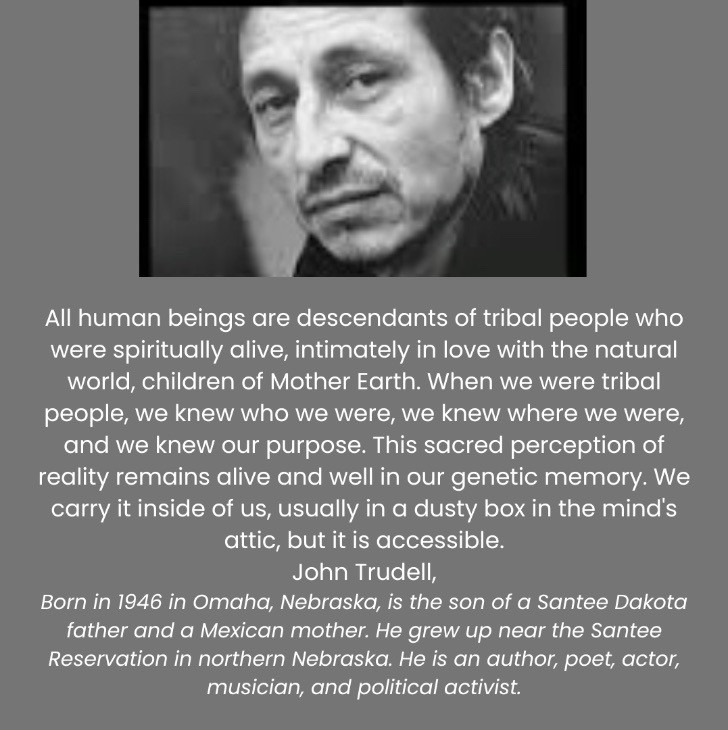
In this Module you will compare Traditional Ecological Knowledge and western science to gain an understanding of the differences and similarities and how they shape the way in which we see, understand, learn about, and interact with others and the world around us. As reminded by John Turdell, all human beings are descendants of tribal people and thus, Traditional Knowledge is already within you. This exploration of TEK and Western Science will help you to explore the connections and differences in ways of knowing.
Objectives:
After completing this module, you should be able to:
- Define Two Eyed Seeing and Ethical Space and how it applies to TEK
- Compare and Contrast Traditional Ecological Knowledge & Ways of Knowing with Western Science & Ways of Knowing, recognizing that there is a great deal of diversity of how things were studied within Indigenous culture.
Benchmark Assessment- Completion of Module 3 Course Journal entries.
- View Scoring Guide>>
Estimated Time for Completion
3 HoursModule 3 Tasks:
-
Students mustMark as done
TEK Points to Understand Before You Begin
As you learned in Module 1 Traditional Ecological Knowledge was going along steadily for thousands of years until colonization. After colonization, the education process of Traditional Ecological Knowledge was disrupted. There was a loss of land and language, and then a period of readjustment. Indigenous people were forced through the assimilation process and part of that process was going through the Western education style system of learning. Many Indigenous people are back to their traditional ecological knowledge, and ways of knowing again. Indigenous peoples’ Traditional Ecological Knowledge was not lost and is coming back.
TASK 1: Think about how you have been taught to see and understand the world around you throughout your life. Particularly think about how you were taught these things within the education systems that you have been a part of throughout your life. Read the sections titled “The Why of Indian Education,” “Medicine Wheel Philosophy,” and “Classroom Considerations” on pages 14-15 of the “Interdisciplinary Manual for American Indian Inclusion” by Martin Reinhardt and Traci Maday”
TASK 2: In your Course Journal, record your general thoughts/reflections on the three sections you read from the “Interdisciplinary Manual for American Indian Inclusion” Consider how your thoughts/views may differ from others with different life experiences, perspectives, and backgrounds than you and include this in your reflection.
-
Students mustMark as done
TASK 3: Indigenous Knowledge has had its roots for thousands of years, there was nothing to interfere with it and then Western knowledge came in. Indigenous people had Western education imposed on them and mastered that form of education.
Many circumnavigated the whole process of Western education and emerged on the other side and are back to their traditional ecological knowledge, and ways of knowing, (Deloria, V., Indian Education in America, 2000). It might be helpful to refer back to Dr. Kimmerer's introduction and her experience with higher education. Many Indigenous people examine how to come back to traditional processes and methodologies that their ancestors had and also explore a curiosity for investigating the value of Western science.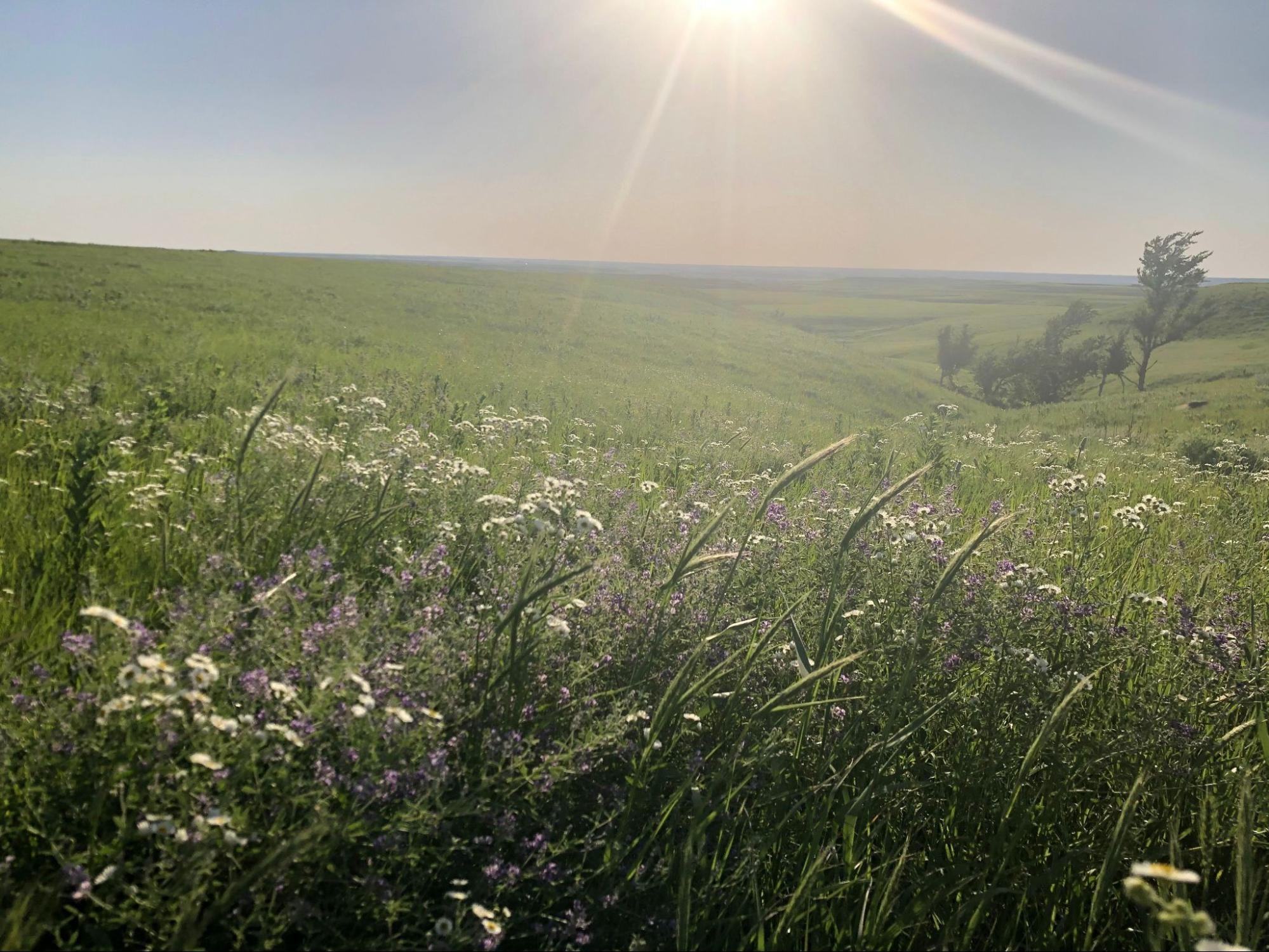
photo credit: Jill Haukos
Read the section titled “An Analogy” and review the corresponding images of a tree and cross-section of a tree on pages 11-14 of the “Interdisciplinary Manual for American Indian Inclusion” by Martin Reinhardt and Traci Maday”
TASK 4: In your Course Journal, record your general thoughts/reflections on the section you read and images you reviewed from the “Interdisciplinary Manual for American Indian Inclusion” and answer the following question:
-
How do you feel learning experiences might be different when considering the analogy of learning Indigenous Knowledge systems?
-
-
Students mustMark as done
TASK 5: Now that you have explored the existence of traditional ecological knowledge prior to the Western education system and the opportunities that are already taking place to value both while recognizing which came first, think about what this might mean for your daily life.
In your Course Journal, answer the following questions about how what you have learned about traditional ecological knowledge and the Western education system might affect your daily life:
How has what you’ve learned altered your perception of the world around you?
How could what you learned affect the ways/processes you use to learn about the world around you?
In what ways could what you learned be incorporated into your daily life?
-
Students mustMark as done
Looking at Frameworks for Two Eyed Seeing and Ethical Space
Two-Eyed Seeing is the Guiding Principle brought into the Integrative Science co-learning journey by Mi'kmaw Elder Albert Marshall in Fall 2004. Etuaptmumk is the Mi'kmaw word for Two-Eyed Seeing. We often explain Etuaptmumk - Two-Eyed Seeing, by saying it refers to learning to see from one eye with the strengths of Indigenous knowledges and ways of knowing, and from the other eye with the strengths of Western knowledges and ways of knowing ... and learning to use both these eyes together, for the benefit of all.
Elder Albert indicates that Etuaptmumk - Two-Eyed Seeing is the gift of multiple perspectives treasured by many Aboriginal peoples. We believe it is the requisite Guiding Principle for the new consciousness needed to enable Integrative Science work, as well as other integrative or transcultural or transdisciplinary or collaborative work. - From the Institute for Integrative Science and Health, Mi'kmaw Elder Albert Marshall http://www.integrativescience.ca/Principles/TwoEyedSeeing/
TASK 6: Watch the following video about Two Eyed Seeing to learn about what two eyed seeing is and why it is important developed by Mi'kmaw Elder Albert Marshall.
TASK 7: In your Course Journal, after watching the video about two-eyed seeing, record why you think using two-eyed seeing would be valuable and beneficial to you and the work that you do.
-
Students mustMark as done
TASK 8: When comparing Traditional Ecological Knowledge and Western knowledge another important component to understand is ethical space. The idea of ethical space is creating a safe space, especially regarding discussions about traditional ecological knowledge and Western knowledge. Creating an ethical space for cultural safety when two ways of thinking/cultures can conflict with each other is essential. Read about what ethical space is and just some of the reasons why it’s important as defined by the 4 Directions of Conservation Consulting Services as presented by Gary Pritchard below:
How do you define ethical space?
• The focus of ethical space is on creating a place for knowledge systems to interact with mutual respect, kindness, generosity and other basic values and principles. All knowledge systems are equal; no single system has more weight or legitimacy than another.
• One system does not need the other to “corroborate” it to achieve internal validity. For example, the written system does not always need archaeological evidence to provide sound “proof” of an Indigenous practice or story
Why ethical space is important:
Indigenous Peoples are understandably hesitant to (re)build or establish relationships of trust with settler governments. The usurpation and dispossession of lands, territories, and waters still resonate in the lived realities of Indigenous Peoples across Canada. In addition, Indigenous systems of knowledge, language, laws, customs, protocols, and practices have never been respected as such.
This quote comes directly from 4 Directions of Conservation Consulting Service in Canada and for this course, it is important to note that it is recognized that this applies to indigenous people across Turtle Island and throughout the world.
From 4 Directions of Conservation Consulting Services, see the following link for the full presentation https://cela.ca/wp-content/uploads/2020/11/Indigenous-Place-Making-Ethical-Space.pdf
See the diagram below for an illustration of ethical space:

*Optional: Review the following by the Yellowstone to Yukon Conservation Initiative facilitated by Gwen Bridge to gain a deeper understanding of ethical space.
TASK 9: In your Course Journal, record where there might be opportunities in your life to incorporate creating an ethical space for cultural safety. -
Students mustMark as done
TASK 10: Explore the intersection of two-eyed seeing and ethical space as outlined by the 4 Directions of Conservation Consulting Services below:
Two-Eyed Seeing and Ethical Space:
Ethical Space cannot be cultivated without Two-Eyed-Seeing, which is the practice of learning to see using two knowledge systems, drawing on both to guide discovery and problem-solving. It is within this Ethical Space that all collaboration, mutual support, and multi-directional knowledge sharing occurs.
John Borrows calls these laws ‘gifts’, of which there are seven: Love, Humility, Courage, Generosity, Respect, Truth, and Wisdom. Wisdom comes last, and love comes first, as the Creator, the Great Spirit, the activation of creation comes from love; love is also the underpinning of the Canadian constitution.
Please note that this information came from a consulting service in Canada.
Those Seven Sacred Gifts were organized into a methodology for western and Indigenous cultures to engage one another, specifically academically.
This methodology was founded on parallel governance, with a ‘western business model’ on one side, and oral traditional governance on the other. The goal is not to blend them, but to allow both disciplines to thrive. Ethical space is everything between those parallels, where bridges can exist. For example, a smudge is equivalent to the gavel and the Seven Sacred Gifts are equivalent to "Robert’s Rules of Order.”
From 4 Directions of Conservation Consulting Services, see the following link for the full presentation https://cela.ca/wp-content/uploads/2020/11/Indigenous-Place-Making-Ethical-Space.pdf
TASK 11: In your Course Journal, reflect on the value/importance that the practices of two-eyed seeing and creating ethical space for cultural safety have to you. Additionally, include what changes you would like to see in at least two of the following: your local community, place of work, place of religion, social groups, educational systems, etc. to include these two practices.
-
Students mustMark as done
Compare and Contrast Traditional Ecological Knowledge & Ways of Knowing with Western Science & Ways of Knowing
Using what you have learned about Traditional Ecological Knowledge and practices for two-eyed seeing and ethical space, you will have the opportunity to compare and contrast indigenous ways of knowing and understanding with Western ways and identify differences and similarities.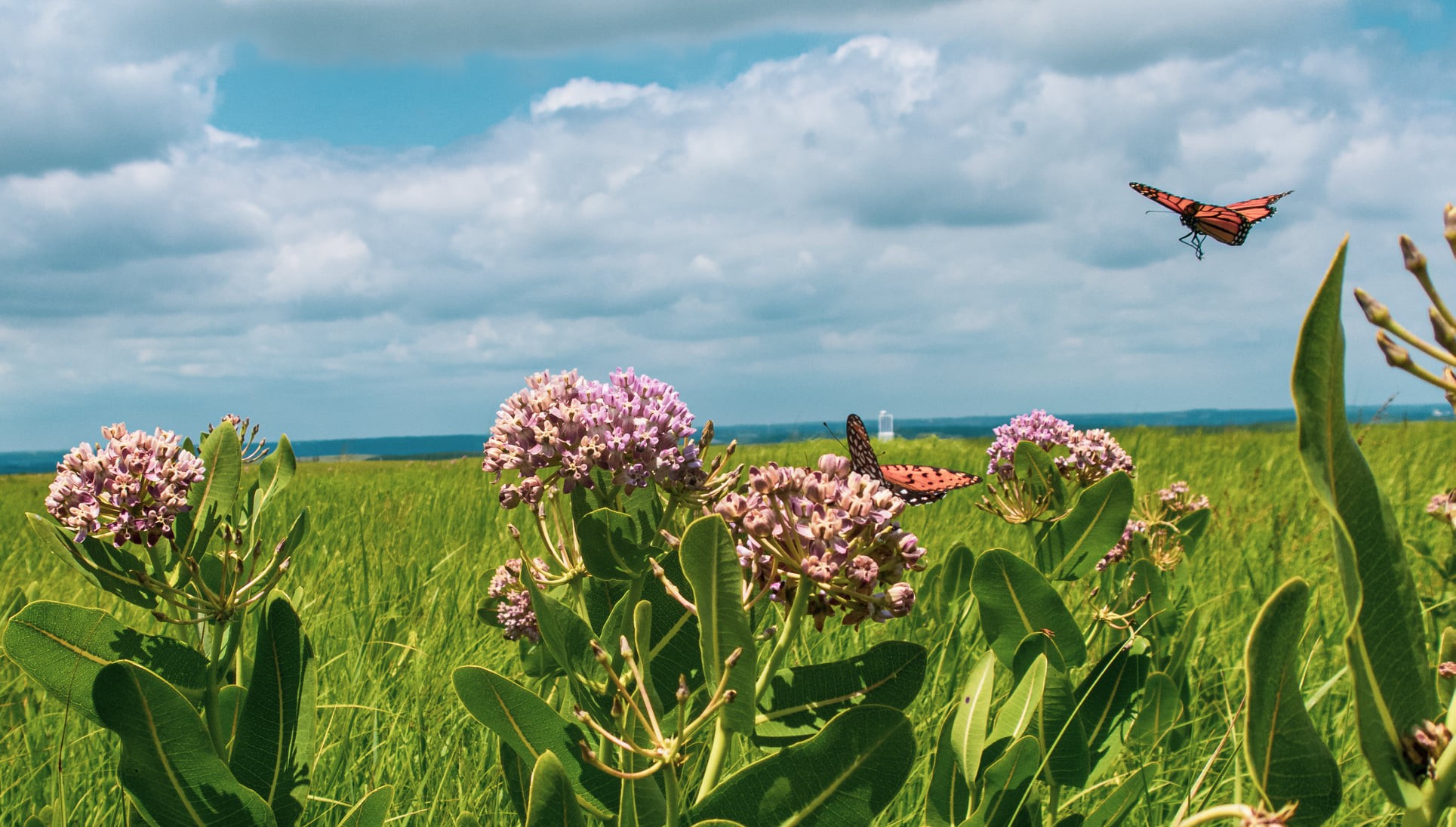
photo credit: Jill Haukos
TASK 12: As you review the compare and contrast table and other resources below, it is important to remember that the goal is to recognize the strengths of both identify ways in which they are complementary, and honor how they are different. It’s imperative to remember and honor that indigenous ways of knowing existed before Western ways and to understand the importance of ensuring that the West doesn’t overpower the indigenous ways of knowing. Further to this point, it’s also important to make the distinction that Indigenous ways of knowing were never lost and it is not a step in going backward to recognize and honor them but instead that they are being brought forward.
TASK 13: In module one you explored several resources on traditional ecological knowledge and you briefly explored comparing Traditional Ecological Knowledge to Western science. In this task, you will do a more in-depth comparison by reviewing the following additional resources on comparing and contrasting traditional ecological knowledge and ways of knowing and Western science and ways of knowing:
-
Example compare and contrast table
-
Qualities associated with traditional (Indigenous) knowledge systems and Western Science (Review the diagram on pg. 9/16)
The resources above include not only examples of how each way of knowing relates to ecology and science but also examples of how each way of knowing relates to several general aspects of life for both indigenous and Western views. This helps give context and background to the ecological and scientific knowledge/ways of knowing for both the indigenous and Western views.
TASK 14: In your Course Journal, in a format that works best for you (paragraph, diagram, table, etc.), your reflections on the following:
-
Overall strengths of both Traditional Ecological Knowledge/indigenous ways of knowing and Western science/ways of knowing.
-
Ways in which you found them to be complementary to each other.
-
How do you think utilizing the strengths of each and the complimentary crossover of the two is beneficial?
-
Where do you see opportunities for utilizing the strengths of each way of knowing and/or the complimentary crossover of the two in your personal and/or professional life?
-
-
Opened: Tuesday, 1 October 2024, 1:00 AMStudents mustMake a submission
Submit Module 3 Course Journal:
- Upload your COURSE JOURNAL with MODULE 3 Tasks completed. You may either upload it as a Word document or share a link to your Course Journal Google Document (Be sure that you set the Sharing Setting to “Anyone with the link” and the role of “Commenter”)