Module 1: What is Traditional Ecological Knowledge?
Section outline
-
Description
Traditional Ecological Knowledge (TEK) is also sometimes referred to as Traditional Knowledge, Indigenous Knowledge and/or Native Science. This knowledge has been passed down from generation to generation and is a living and constantly evolving way of knowing for Indigenous people today. In this module, you will explore both your own and Indigenous ways of knowing and sharing that knowledge with others, explore the similarities and differences between Western Science and TEK and create a representation of your understanding of what TEK is.
Objectives
After completing this module, you should be able to:- Describe how you know and share knowledge and compare that with Indigenous knowledge and knowledge sharing
- Develop a representation of TEK which represents the key components and/or tenets of TEK.
Benchmark Assessment- Completion of Module 1 Course Journal entries
- View Scoring Guide>>
Estimated Time for Completion
3 HoursBefore You Begin:
Please allow us to introduce you to the course authors. We are pleased to be able to share their Indigenous Knowledge and strong desire for students to engage in developing a deeper connection, understanding, and relationship with the world around them.
Getting to Know the Course and Authors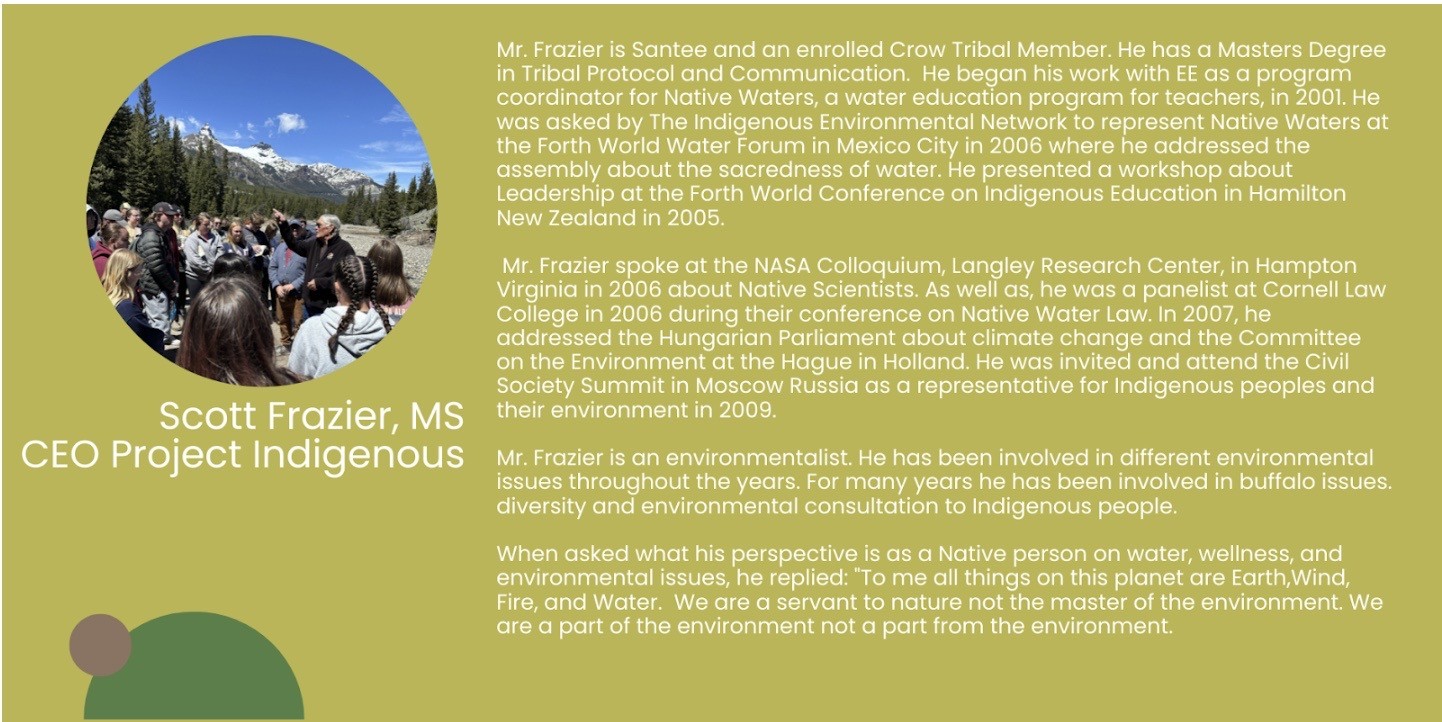
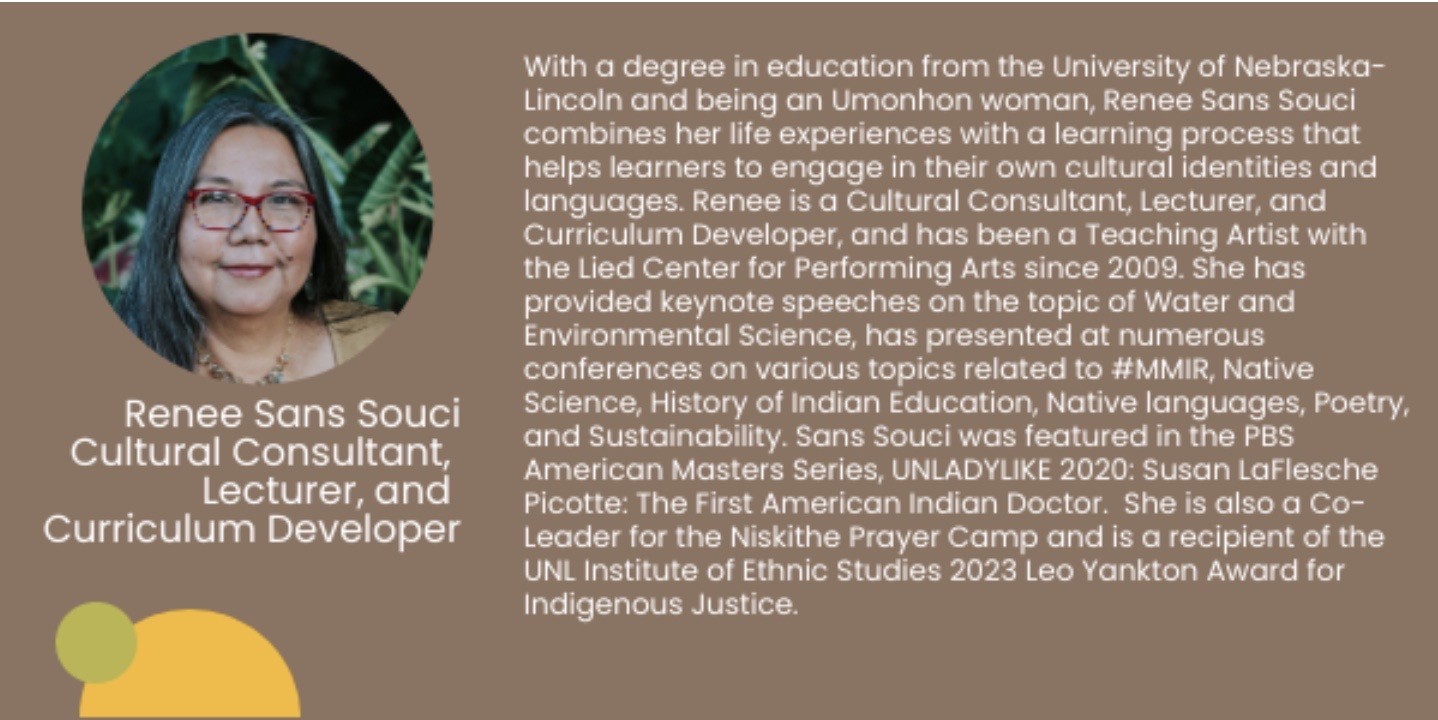
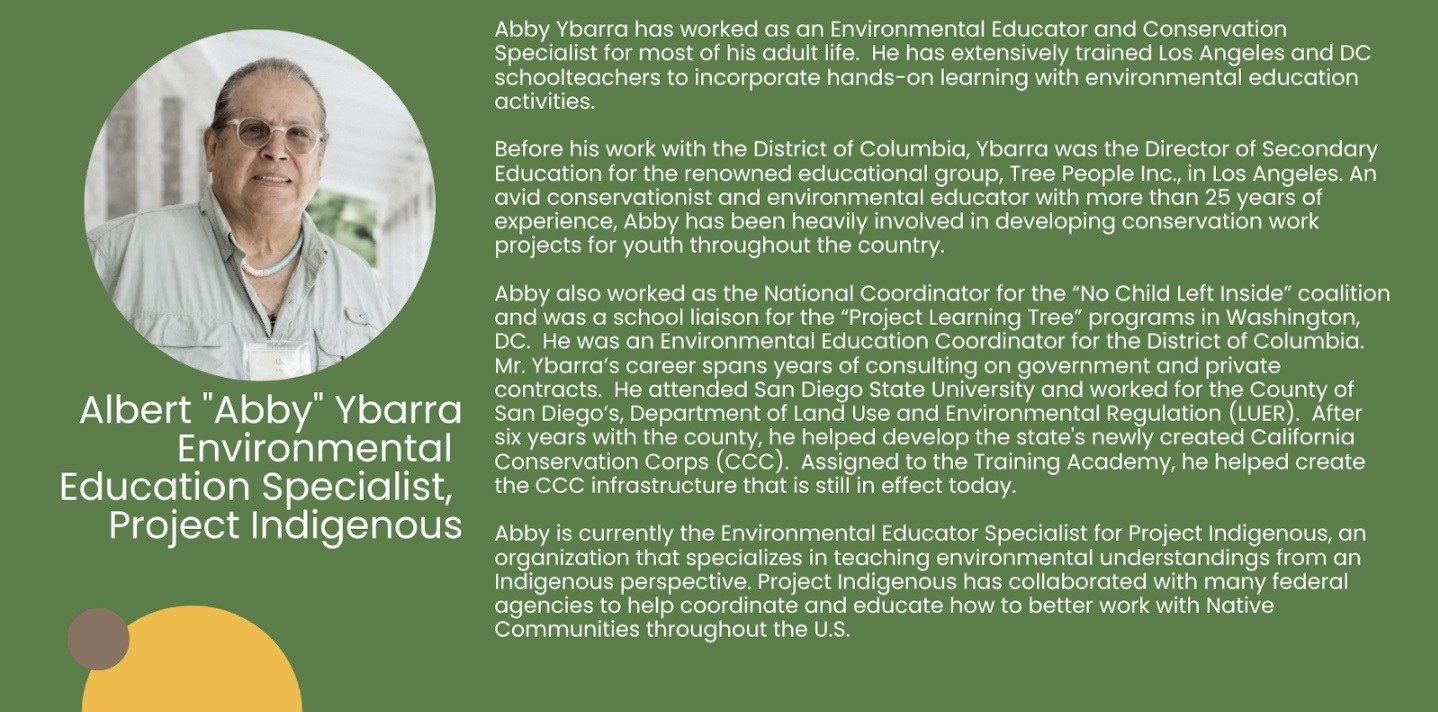
-
Students mustMark as done
Knowing and Sharing Knowledge--What Is Your Experience?
Knowledge, a cornerstone of human development and progress, encompasses the insights, information, and skills acquired from others, through experience, education, and introspection. It serves as a guiding force, enabling individuals and societies to understand, navigate, and transform the world around them. To begin our exploration of Traditional Ecological Knowledge, Indigenous Knowledge, or Native Science, you will first ground yourself in exploring your own knowledge acquisition. What are the ways you come to know something? And how do you share that knowledge with others? How do you use that knowledge in your daily life?
FIRST - Access the Traditional Ecological Knowledge and EE Course Journal. You will need to either Make a Copy of this file and edit it as your own Google Doc or download it as a Microsoft Word document. Click File, Make a Copy or Download. You will record responses to prompts and complete tasks in your own version of the Course Journal throughout this course. At the end of each module, you will submit your Course Journal with the relevant sections completed.
TASK 1: In your Course Journal, reflect on the following:
-
We all gain knowledge through the formal school/education process, but our knowledge expands far beyond what we’ve learned in classrooms. If possible, go outside to a place where you can reflect about something that you’ve come to know in relation to the natural world. Maybe it has to do with plants or animals, maybe rocks or water. Or perhaps with seasonal changes or weather. Zero in on something that you have come to know and tell a story about that knowledge.
-
How did you come to know this? Was it from a caregiver or relative? Was it through observation? What events and/or activities led to you coming to know this?
-
How do you use this knowledge in your daily life?
-
How, if applicable, have you shared this knowledge with others?
-
-
Students mustMark as done
What is Traditional Ecological Knowledge?
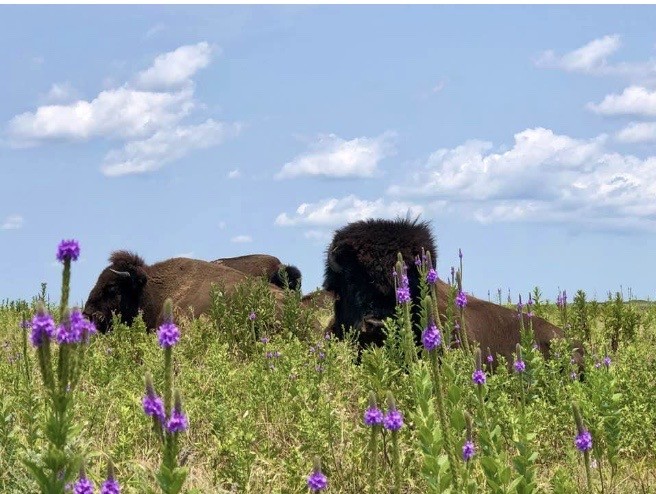

Traditional Ecological Knowledge or TEK is a specific way of acquiring and sharing knowledge through observation over time, innovations, practices and beliefs. Transmission of that knowledge occurs through oral and written traditions, song, ceremonies, and representations in clothing, beading patterns, carvings and more. TEK is also referred to as Native Science, Indigenous Knowledge and Traditional Knowledge and is deeply rooted in a connection to place and the interdependence and relationships between all things in both a physical and spiritual sense. This knowledge is often considered sacred.
This knowledge is crucial for sustainability. However, the process of colonization has profoundly disrupted TEK in numerous ways.
1. Land Dispossession and Relocation: Colonization often involved the forceful displacement of indigenous peoples from their ancestral lands. This separation from their traditional territories disrupted their intimate relationships with the environment, which are essential for the transmission and application of TEK. For example, the relocation of Native American tribes to reservations in the United States severed their ties to lands that were integral to their cultural and ecological practices.
2. Cultural Suppression: Colonial policies frequently aimed to suppress indigenous cultures and languages, which are the primary vehicles for transmitting TEK. Missionary schools, for example, prohibited Indigenous languages and cultural practices, undermining the oral traditions through which TEK is shared and taught. The residential school system in Canada exemplifies this, where Indigenous children were forbidden from speaking their native languages or practicing their traditions, leading to a loss of Ecological Knowledge passed down through generations.
3. Environmental Degradation: Colonial exploitation of natural resources led to significant environmental changes that disrupted Traditional Ecological systems. Deforestation, mining, agriculture, and urbanization altered the landscapes and ecosystems that Indigenous peoples relied upon, making it difficult to maintain traditional practices and knowledge systems. For instance, the extensive logging and mining activities in many parts of Africa and South America have destroyed habitats and biodiversity critical to Indigenous ways of life. There are multiple examples around the world.
4. Legal and Political Marginalization: Colonial and post-colonial legal systems often marginalized Indigenous peoples and denied them rights to manage their lands and resources. This exclusion from decision-making processes about land use and resource management meant that TEK was disregarded in favor of Western scientific approaches. The imposition of Western property laws and the failure to recognize Indigenous rights continue to pose significant challenges for the practice and preservation of TEK.
5. Economic Pressures: The introduction of a market economy and the subsequent economic pressures forced many Indigenous peoples to abandon traditional practices in favor of more commercially viable activities. This shift often led to the neglect of TEK, as younger generations were encouraged to pursue formal education and employment opportunities rather than traditional livelihoods.
1. Wolfe, P. (2006). Settler Colonialism and the Elimination of the Native. *Journal of Genocide Research*, 8(4), 387-409.
2. Alfred, T. (2009). *Peace, Power, Righteousness: An Indigenous Manifesto*. Oxford University Press.
3. Truth and Reconciliation Commission of Canada. (2015). *Honoring the Truth, Reconciling for the Future*.
4. Battiste, M. (2000). *Reclaiming Indigenous Voice and Vision*. UBC Press.
5. Global Witness. (2018). *Defending Tomorrow: The climate crisis and threats against land and environmental defenders*.
6. Macdonald, F. (2002). Colonizing Our Bodies. *International Journal of Indigenous Health*, 1(1), 23-32.
7. Anaya, J. (2004). *Indigenous Peoples in International Law*. Oxford University Press.
8. Simpson, L. B. (2004). Anticolonial Strategies for the Recovery and Maintenance of Indigenous Knowledge. *The American Indian Quarterly*, 28(3/4), 373-384.
9. Coulthard, G. S. (2014). *Red Skin, White Masks: Rejecting the Colonial Politics of Recognition*. University of Minnesota Press.
There is an increasing recognition of the importance of TEK and a recognition of the value and relevance of Indigenous and local knowledge systems in contemporary environmental management and sustainability practices. This course seeks to provide educators with a deeper knowledge of TEK both historically and in current practices, as well as expand skills in using TEK practices as a way to connect students to place and develop the skills and mindset to use TEK practices as a way of knowing and sustaining the world around us.
To better understand TEK, first explore more on what TEK is.
TASK 2: Read this brief overview of Traditional Ecological Knowledge from the North American Association for Environmental Education (NAAEE) Guidelines for Excellence
TASK 3: Read this overview of Traditional Ecological Knowledge from the Oregon State College of Forestry.
Next explore TEK as compared to Western Science, which is most often taught in schools and centers around scientific processes, theories and laws as represented in science standards and most textbooks.
TASK 4: Exploring Traditional/Indigenous/Native Science and Western Science. To begin, explore this brief overview of TEK and Western Science from Dr. Robin Wall Kimmerer from the Grand Canyon Trust. Next, take a deeper dive into exploring TEK and Western Science with Dr. Kimmerer in this video (optional).
. -
Students mustMark as done
TASK 5: Watch this video from Dr. Gregory Cajete talking about Native Science.
.TASK 6: Watch this video from Scott Frazier exploring Traditional Knowledge.
OPTIONAL ADDITIONAL RESOURCES: Power And Place by Deloria and Wildcat
TASK 7: In your Course Journal, choose your way to represent what you see as the key components/tenets of TEK, it could be a drawing, a diagram, a paragraph, a metaphor, a video, a recording, or another method that feels appropriate to you.
OPTIONAL EXTENSION: Go and visit with a parent, grandparent, aunt, uncle or other elder and ask them how to do something that is traditional in their family. Ask them how they learned this or who taught them. -
Opened: Tuesday, 1 October 2024, 1:00 AMStudents mustMake a submission
Submit Module 1 Course Journal:
-
Upload your COURSE JOURNAL with MODULE 1 Assignments completed. You may either upload it as a Word document or share a link to your Course Journal Google Document (Be sure that you set the Sharing Setting to “Anyone with the link” and the role of “Commenter”).
-
