Module 2: How We Know
Section outline
-
Description:
Explore how scientists understand the climate system through interdisciplinary observations and modeling.
Objectives:
After completing this module, you should be able to:- Describe the relationship between weather, regional climate, global climate.
- Describe how natural causes alone do not explain climate change.
- Explain climate modelling today along with the history of climate modeling.
Assessment:- Submit Module 2 Course Journal and earn a score of at least 2.
- View Scoring Guide>>
Module 2 Tasks:
-
Students mustMark as done
How We Know
Scientists understand the climate system through interdisciplinary observations and modeling.
READ the Essential Principle 1: How We Know section of the Climate Literacy Essential Principles (2024) framework (pg. 10-12)
-
Students mustMark as done
Weather vs. Climate
What is the difference between weather and climate? Climate is not the same thing as weather. Weather is the minute-by-minute condition of the atmosphere (such as temperature and precipitation) on a local scale. Climate is the long-term average weather conditions of an area. The term climate change refers to significant and persistent change in an area’s average climate conditions or their extremes.
TASK 5: READ about Weather and Climate from UCAR; then WRITE a short paragraph (less than 300 words) to describe:
- How weather and climate relate to each other.
- The types of weather that happen in your regional climate zone where you are.
- The difference between regional climate and global climate.
- How does geographic scale (neighborhood to planetary) relate to these concepts?
WATCH each of the NASA data visualizations (set slides to presentation mode and play the short video visualization on each slide) to learn more about how natural causes alone do not explain climate change.READ about the Possible Regional Tipping Points Elements from the 5th National Climate Assessment - view figure 2-15 and its caption below
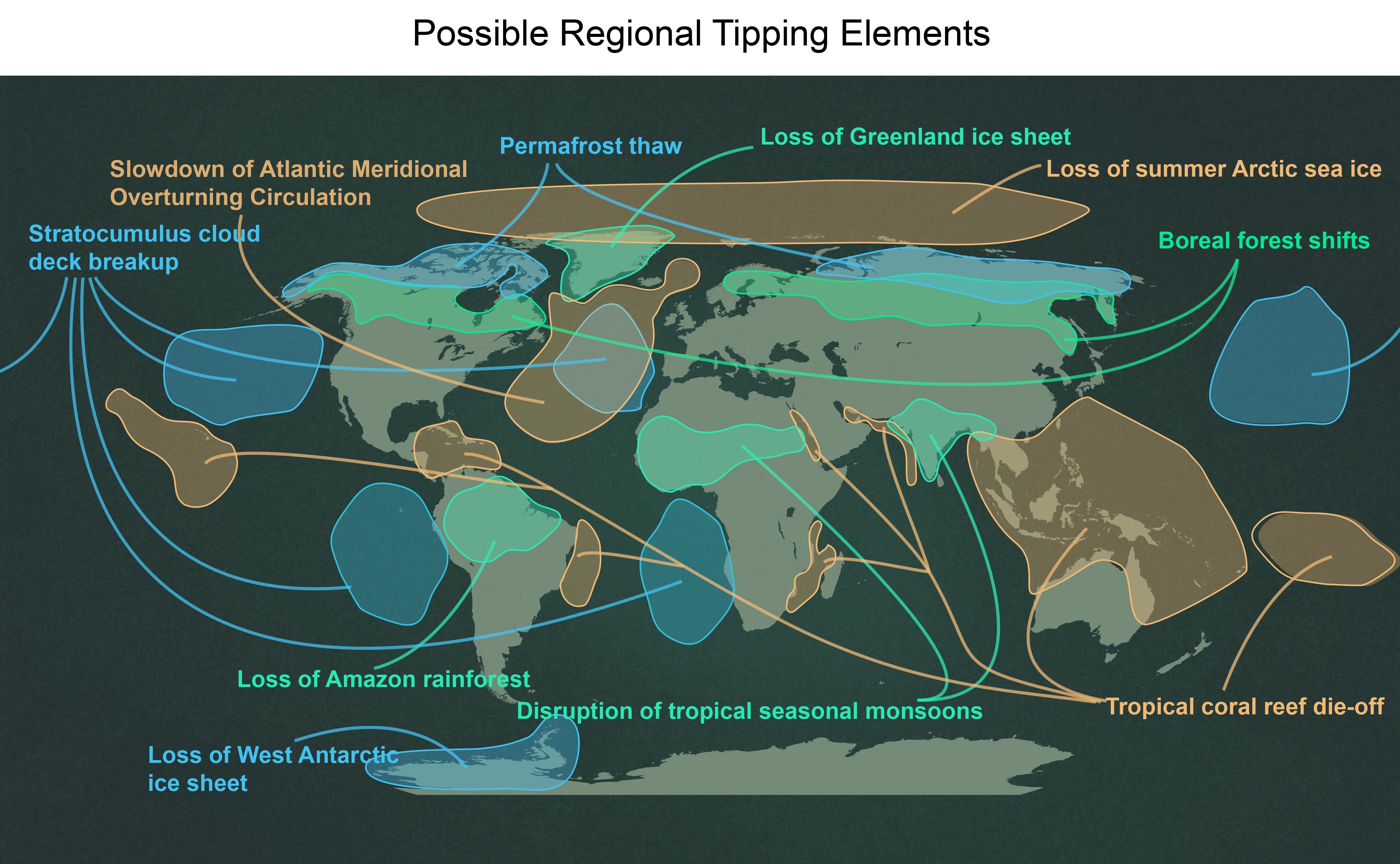
Continued warming could push some aspects of the Earth system past tipping points.
Figure 2.15. The figure shows 10 potential tipping elements in the climate system. These include changes to tropical and boreal forests and coral reefs, the loss of Greenland or West Antarctic ice sheets, and changes to the circulation of the oceans and the monsoons. The spatial area affected by each tipping element is shown; colors are used for visual clarity. Adapted with permission from Figure1 in Wang et al. 2023,240 which was adapted from McSweeney 2020. - 2023 National Climate Assessment
EXPLORE the History of Climate Science Research with either this timeline from UCAR (view as a PDF) to learn more about climate modeling history; OR this short article "The First Climate Model Turns 50, And Predicted Global Warming Almost Perfectly".
TASK 6: Considering all that you have explored and learned in this module, WRITE a response to these questions (less than 300 words):
- What concepts or topics captured your attention or struck you as powerful?
- Ideas that moved, engaged, or provoked you?
- What concepts would you like to take time to dig in and learn more about?
- How do you currently or how could you incorporate the climate literacy essential principle of “How we know” in your communications, outreach, and instruction practice?
EXTENSION: Past Climate: NOAA (or view PDF) -
Opened: Monday, 12 August 2024, 7:13 PMStudents mustMark as done
Submit your completed Module 2 Course Journal.
- View scoring guide>>
- You may upload a Word document or submit a link to a Google Doc (preferred). If you submit a link to a Google Doc, adjust the sharing settings so that it can be viewed by anyone with the link. Click the blue Share button in the top right. A new box will open, under Get Link, select 'Anyone with the link'.