Module 2: Developing High Quality Early Childhood Environmental Education Program Infrastructure
Section outline
-
Description
In this module you will be introduced to environmental education for young learners, focusing on ages three through six. You will also learn about the Early Childhood Environmental Education Programs: Guidelines for Excellence. These Guidelines comprise a set of recommendations for developing and administering high-quality, early childhood environmental education programs. These recommendations provide a tool that can be used to ensure a firm foundation for new programs or to trigger improvements in existing ones. We’ve split learning about these six Key Characteristics into Module 2, which focuses on program infrastructure, and Module 3, which focuses on fostering learning.
Objectives
After completing this module, you should be able to:
- Identify and understand key characteristics of high-quality, early childhood environmental education program infrastructure.
- Identify ways to apply these key characteristics to your programs.
Benchmark Assessment
- Completion of Module 2 Course Journal entries
- View Scoring Guide>>
Estimated Time for Completion
2 hours 30 minutes
Module 2 Tasks
-
Key Characteristic #5 - Places and Spaces
Overview: High quality early childhood environmental education programs provide places and spaces, both indoors and out, that are safe, enticing, comfortable, and enhance learning and development across all learning domains. This Key Characteristic includes the following Guidelines: (5.1) Spaces and Places to Enhance Development, (5.2) Natural Components, (5.3) Comfortable for both children and adults, (5.4) Maintenance and Usability, (5.5) Health, Safety, and Risk, (5.6) Environmental Sustainability.
TASK 6: Outdoor spaces come in a variety shapes and sizes. Some are well developed for outdoor learning and play and some are not. The Natural Learning Initiative has developed best practice indicators for preschool outdoor play and learning environments. Read through the best practice indicators below:
13 Best Practice Indicators from the Natural Learning Initiative 2021. Preschool Outdoor Play and Learning Environments Best Practice Toolkit. Natural Learning Initiative.
- There are 10 or more play and learning settings.
- There is a looping, curvy, primary pathway for circulation and wheeled-toy use.
- There is a grassy lawn for games, activities, and events for many children.
- There are sufficient shady settings in addition to trees.
- There is a variety of loose materials, accessible for children to play with.
- There is sufficient portable play equipment, including different types of wheeled toys, accessible for children to play with.
- There are sufficient gross motor activities supported by the outdoor play and learning environment.
- There are sufficient trees.
- There is a proportion of trees that are edible fruiting species.
- There are sufficient shrubs and vines (including fruiting species), ornamental grasses, and perennial flowering plants.
- There is a designated vegetable garden with sufficient produce for snacking and/or meals.
- There is a covered outdoor classroom/gathering place large enough for all children in a class to use together.
- There is sufficient storage for wheeled toys, portable play equipment, loose parts, and other play and learning materials.
Reimagining your outdoor play and learning space doesn't have to be a huge financial investment. Explore Creative Play Settings on a Budget to learn about affordable options for designing and activating your outdoor space for nature play and learning.
OPTIONAL RESOURCES:
- How-To Guides (ECHO Website) Winter Play
- Playing By the Rules Colorado - guidebook that goes through settings and looks at them through the licensing requirements, etc.
TASK 7: In your Course Journal, reflect on the following questions:
- What are your reactions to the guideline’s best practice indicators?
- Which best practices are most important to you?
- What challenges do you foresee in applying the best practices? What are potential solutions to these challenges?
- What creative play materials could you add?
TASK 8: Look at the two pictures below. Each illustrates an undeveloped outdoor space that could benefit from improvements. Select one and in your Course Journal, discuss how it could be improved to provide opportunities for outdoor learning and play. (Bonus Fun: If you like, print out one of the photos and sketch the improvements you would make and annotate it towards one or more of the ten principles above. Then take a photo and insert it into your Course Journal)
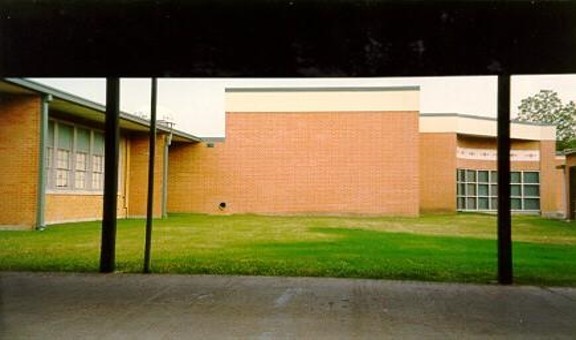
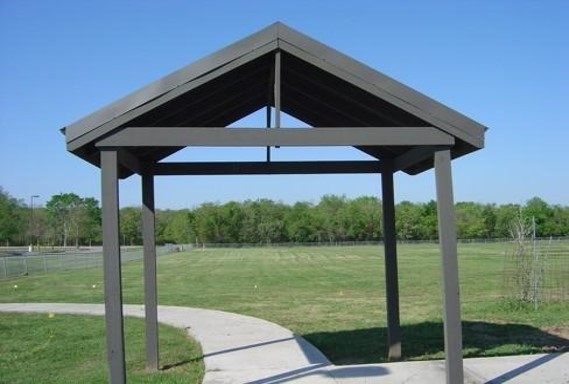
TASK 9: Look at the photos below of re-designed early childhood spaces for outdoor learning from the National Wildlife Federation - Early Childhood Health Outdoors.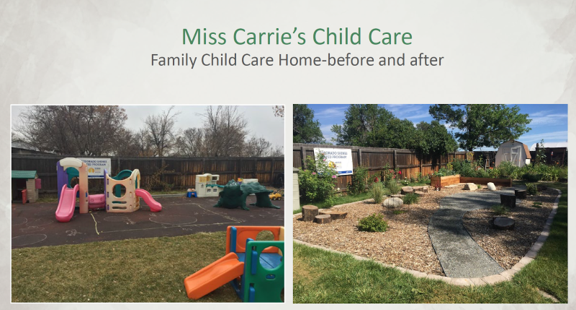
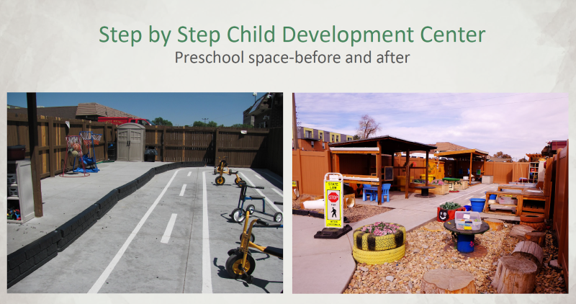
In your Course Journal reflect on the following questions:
- What do you like about these spaces?
- What elements would you like to incorporate into your own space?
-
Opened: Monday, 22 January 2024, 2:00 AM
Submit your completed Module 2 Course Journal.
- View Scoring Guide >>
- You may upload a Word document or submit a link to a Google Doc. If you submit a link to a Google Doc, adjust the sharing settings so that it can be viewed by anyone with the link. Click the blue Share button in the top right. A new box will open, under Get Link, select 'Anyone with the link'.